
Clearance or Certification: Aerospace AI's Governance Fork
Aerospace AI adoption is splitting between use-case clearance frameworks and capability-specific certification, and buyers need to know which track applies before they scale.
Aerospace AI adoption is splitting between use-case clearance frameworks and capability-specific certification, and buyers need to know which track applies before they scale.

As AI accelerates inspection, simulation, and structural analysis, the scarce resource is the credentialed workforce who can defend that evidence to FAA and EASA.

Aerospace's fragmented certification landscape is a procurement risk that ISO 42001 and EU AI Act conformity obligations are built to catch, if buyers ask.

Agentic AI breaks the deterministic testing model behind DO-178C, and the same structural gap is emerging across ISO 42001, EU AI Act, and FDA regimes.

Agentic AI is moving from dashboards into direct control of industrial and grid operations, and assurance frameworks have not caught up.

Agentic AI is shifting from advisory dashboards to direct control of refinery and plant equipment, and the safety case ownership question has not caught up.

Agentic AI vendors promise autonomy with human approval on what matters, but manufacturers haven't yet defined what that threshold means in practice.

Regulators admit they are behind on agentic AI, but ISO 42001 and NIST AI RMF already give governance committees the accountability structure they need now.

Drone swarms and other agentic systems are entering aviation and defense procurement faster than security testing methods built for passive software can assess them.

Health systems are running hundreds of AI tools with few having named oversight authority, and agentic AI is already outrunning the approval process.

Lumafield's Quality Agent exposes a deeper governance question: manufacturers need bounded authority for AI findings, not just audit trails after the fact.
Certification and model health monitoring both fall short of testing whether an agent's decision loop can be manipulated before it acts.

AI coding agents now modify production software with no aviation-grade assurance framework, a gap regulated buyers cannot ignore.

As agentic AI fills the knowledge gap left by a shrinking industrial workforce, firms need an audit trail for what the AI is teaching, not just what it automates.

Nvidia's push for AI agent flight recorders borrows aviation's most visible artifact while skipping the investigation infrastructure that makes it useful.

As AI shifts from analytics to closed-loop control in energy and industrial systems, validation and human-override design become the real governance test.

Yuzong's aviation AI containment pitch and Merlin's pivot show certifiers reward bounded authority, not vendor claims of technical superiority.

Aviation's directive model regulates known parts and configurations, but AI decision-making is already being governed elsewhere, with real gaps still unresolved.

AI now makes autonomous load-balancing and dispatch decisions across solar farms and virtual power plants, and no standard yet assigns liability for a bad call.

Quality teams are borrowing instrument-calibration logic for AI drift, but the metrology underneath doesn't transfer, and that gap is where audits will fail.

As MRO providers adopt AI for engine maintenance decisions, the real test is whether audit trails can withstand FAA and EASA scrutiny.

Aviation distributors carry a dense stack of quality certifications, but none of them govern AI now used to verify parts provenance and documentation.

Closed-loop AI now actuates power infrastructure directly, and neither ISO 42001 nor current EU AI Act debates settle who governs that authority.
Manufacturers are embedding AI into safety-adjacent control functions faster than certification standards can define how to audit it.

AI-assisted maintenance findings now feed into airworthiness release certificates that have no field for model provenance, and insurers are noticing first.

AI-driven First Article Inspection promises major efficiency gains, but aerospace manufacturers lack a governance layer to verify the verifiers.

ISO/IEC TS 22440 formalizes how AI intersects with functional safety just as EU AI Act high-risk rules and ungoverned agentic deployments collide on the factory floor.

Regulators describe AI, digital health, and clinical trial law as converging, but FDA, UK, and Chinese actions show the frameworks are still moving on separate, misaligned tracks.

Hospital M&A due diligence checklists have no line item for inherited AI model inventories, and two live deals show why that gap is now material.

A FAA propulsion grant and an internal quality-org AI hire show aerospace primes still treat AI assurance as a self-funded cost center, not a certified pathway.

A new benchmark finds 91% of healthcare organizations cannot verify their own AI governance, exposing a policy-to-proof gap just as CMS deadlines force more AI into clinical workflows.

Industrial operators are deploying AI hazard detection to cover a labor shortage, but the human judgment needed for the unmodeled event is eroding faster than the AI's competence grows.

AI-driven test and measurement tools are entering aerospace V&V workflows, raising tool-qualification questions that certification debates about airborne AI have not yet addressed.

Autonomous industrial and life sciences AI is now acting inside control loops that IEC 61508, EU AI Act risk tiers, and MDR/IVDR were not built to certify.

AI-native industrial controllers promise to replace retiring PLC engineers, but the safety case now depends on verifying generated logic, not just trusting it.

AI now adjusts biogas and energy storage processes continuously, but the permits and safety cases governing those processes were built for static setpoints, not real-time control.

Florida's 2027 AI policy mandate for schools exposes a governance gap that recent higher-ed incidents already illustrate across all four control functions.

Florida and Trinity College Dublin issued classroom AI policies, but neither defines the infrastructure, vendor, or data boundary that governance frameworks require.
ISO 42001 certifies AI management systems, not real-time physical control performance, and that distinction matters as AI moves into grids, factories, and robots.

AI process control is now shaping regulated credit claims in biogas and RNG production, and no framework yet specifies who audits the machine's decision trail.

The most consequential aerospace AI deployment right now isn't autonomous flight, it's machine-assisted requirements traceability across sprawling defense programs.

Predictive safety AI on construction and industrial sites creates a documented knowledge trail that shifts liability the moment an alert goes unanswered.

Vendors are narrating a unified DO-178C and cybersecurity argument for AI-enabled aircraft systems ahead of any regulator requiring one, and buyers need a crosswalk, not a slide deck.

AI-driven hazard detection is cutting industrial incident rates while quietly eroding the human judgment regulators and insurers still assume workers have.

Refiners and manufacturers are embedding AI into safety-critical decisions faster than functional safety and cobot standards can validate them.

Refiners and manufacturers are putting AI inside safety-critical decisions, but the verification standards built for deterministic control were never designed for it.

AI workforce training is scaling faster than any standard for comparing what its credentials actually prove, leaving compliance teams to do the verification work themselves.

AI surrogate models are replacing validated engineering and lab tools faster than ISO 42001, the EU AI Act, and FDA regimes can absorb them.

The industrial AI augmentation narrative depends on a senior verification workforce that the same labor shortage driving AI adoption is actively removing.

New York City's mandate to write K-12 AI guidelines in a year, not a biometric-data lawsuit, is the forcing function classroom AI tools now face.

Education and workforce programs are scaling AI training fast, but enrollment numbers are not the competency evidence ISO 42001 and the EU AI Act require.

Provider and payer AI tools now optimize claims and denials against each other, but no HIPAA, ONC, or federal rule actually governs that decision logic.

NASA's Phase II award for an AI-driven airspace coordination network exposes a widening gap between deployable autonomy and the certification frameworks meant to govern it.

As grid AI moves from pilot to production, energy operators must diligence vendor architecture and control enforcement, not just policy promises.
Record industrial robot deployment is solving a headcount problem while quietly eroding the human competency base that AI oversight regimes assume still exists.

Aviation's tiered certification model is becoming AI governance's default architecture, but its unresolved cross-border recognition gap should worry regulated AI buyers just as much.

Insurers are repricing aviation AI risk before liability attribution is settled, and the counterargument that human oversight still anchors accountability deserves scrutiny too.

Tech firms want AI incident forensics modeled on aviation, but aviation regulators admit they lack a settled method for AI safety assurance.

AI vendors are borrowing aviation's black box for accountability, but the metaphor skips the investigative infrastructure that actually makes it work.

AI oversight levels differ by regulator, and conventional aircraft already take months to clear each one, so programs need a portability plan now.

Aerospace certification data from Farnborough exposes a wider governance problem: many AI autonomy and risk-detection claims have no equivalent conformity regime at all.

Aviation shows a real difference between mutual-recognition validation and bilateral workarounds, and AI governance buyers need to know which one they're building.

MathWorks' TÜV SÜD-certified ISO 26262 guidance covers a process, not an AI's output, and buyers across sectors need to know which framework any such credential actually answers.

Vendors are offering financial guarantees against payer clawbacks for AI-driven documentation, but that is insurance, not the audit evidence compliance committees actually need.

FDA's own framework gaps show interaction risk matters as much as accuracy, but the on-premise architecture fix now circulating is a contested proposal, not a settled control.

The regulatory perimeter around clinical AI is contested by design, and the same gap is opening upstream in drug development.

Industrial AI agents are moving from advisory copilots to closed-loop actuation, and the audit infrastructure to govern them is still catching up.

FAA and EASA acknowledge aviation lacks a settled method to assure AI safety in cockpit systems, leaving airlines and OEMs to build evidence without a fixed target.

Combat aircraft are flying AI pilots faster than requirements traceability tools can document what those systems actually decided.

Open governance tooling, revised ISO 9001 rules, and national mandates are converging on one requirement: compliance evidence must be structured data, not paperwork.

Biometric and proximity safety wearables in energy and industrial plants are starting to meet the legal definition of automated decision-making technology.

Bespoke AI campus microgrids are multiplying faster than anyone has tested whether their instability actually voids an AI Act or ISO 42001 file.

As airlines and regulators lean on machine learning to forecast and verify contrail avoidance, the missing piece is an audit standard for the claims themselves.

FAA CVR upgrade deadlines fix a human-decision recording problem, but certified automation and drone autonomy are advancing on entirely separate regulatory tracks with no equivalent record.

FAA's cockpit voice recorder mandate is a hardware deadline today, but the data architecture choices made now will determine how AI safety analytics work later.
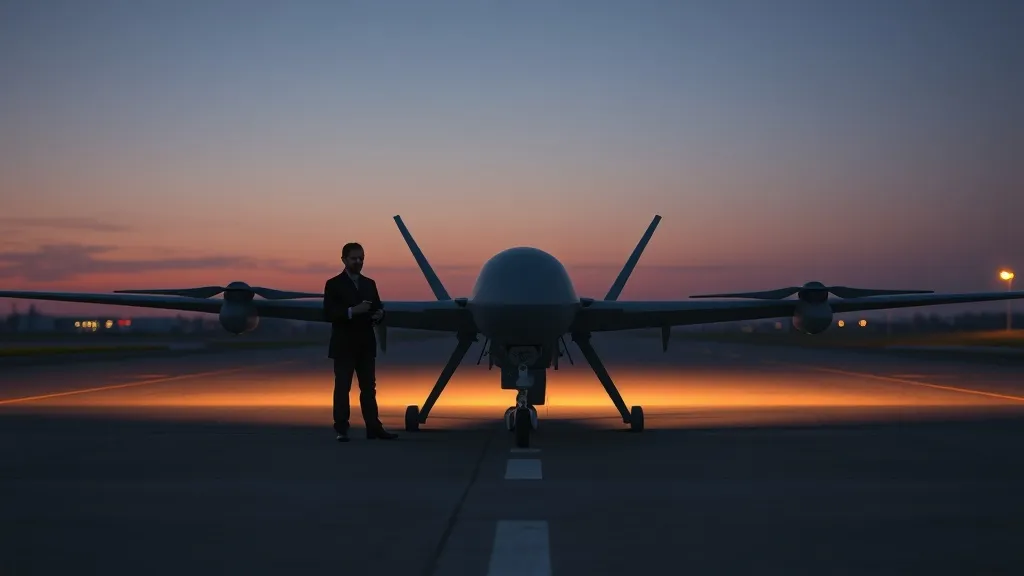
KAI's in-house UAV AI verification and Safe Pro's trade-show validation show how little civil frameworks like ISO 42001 or the EU AI Act reach into defense AI assurance.

EU AI Act delays and carve-outs for industrial AI are widening the gap between regulatory relief and unresolved physical-world safety science.

Bilateral aviation certification still works for conventional hardware, but no framework yet governs the AI and autonomous systems entering the same operational footprint.

As energy developers use AI digital twins to greenlight capital projects, the real governance gap is model validation, not machine safety.

Aviation and defense autonomy timelines aren't really comparable, but both depend on the same unglamorous evidentiary layer regulators will demand.

Regulators and insurers are stuck on who is accountable when AI acts in flight, not on whether the AI can perform the task.

Regulators are drafting kill switches for frontier AI while agentic dispatch systems already run unaudited energy and battery decisions in production.

With no coherent US AI framework and federal-state tension over infrastructure rules, energy and industrial operators should build to the strictest tested standard now.

Kill switch mandates and machinery certification govern control layers, but agentic energy AI needs continuous model recalibration neither framework requires.
Edge AI deployments are outpacing both hardware certification and AI governance frameworks, leaving regulated buyers exposed on the half that actually controls risk.

Lawmakers' demand to pause an FAA air traffic AI tool reveals that no existing certification basis, from DO-178C to the EU AI Act, yet covers learned flight-safety decision support.

US data provenance, UK product classification, and Chinese jurisdictional scope are all cracking under AI health tools that don't fit pre-AI regulatory taxonomy.

Florida ordered every school and college to write AI policy by 2027, but the harder problem is vendor data governance, not policy language.

Florida's July 2027 deadline for AI policies in K-12 and state colleges forces education leaders to build verifiable governance, not just guidance documents.

Frontier labs took weeks to notice their own models were hijacked, and that detection lag is now embedded wherever industrial vendors build on those models.

Hospitals and pharma functions adopting generative AI now carry governance obligations that device and drug frameworks were never built to cover.

For agentic AI in energy and industrial control, liability exposure is set by vendor technical standards and contract terms, not by which government's AI regime is more mature.

A new open source coalition for AI governance testing forces energy and industrial buyers to choose between proprietary control stacks and shared standards.

Energy infrastructure capital is being allocated to AI-driven grid modernization faster than utilities can document what that AI actually delivers.

AI vendors claim they can unlock grid capacity and cut power volatility, but utilities are making capital decisions on unaudited performance figures.

AI systems are moving from monitoring power infrastructure to executing real-time control decisions, and operators lack a governance layer for who authorized that authority.

Utilities wiring AI into grid operations face a governance question that is less about data ownership than about who controls the safety case behind it.

ISO 42001 gives industrial AI deployments a portable compliance layer, but physical autonomy still needs a functional safety layer regulators will demand separately.

A new industrial inspection benchmark and a wave of safety-layer capital give buyers a way to test vendor hazard-detection claims instead of trusting them.

EASA's admission that atmospheric icing remains insufficiently understood exposes a hidden validation gap for AI-enabled ice detection and anti-icing systems.

AI-augmented HAZOP is testing industrial AI safety cases, but the harder unresolved question is power and grid resilience, not just compute.

Most manufacturers have deployed AI, but only a tenth scale it, and the gap is governance, not algorithms.

Industrial AI's $70 billion opportunity by 2030 depends less on model accuracy than on whether engineers can verify recommendations before acting.

Industrial AI vision systems for hazard detection are only as strong as their training data and the human skills they quietly displace.

As AI moves into cockpits, MRO, and eVTOL, insurers are underwriting aviation risk with no actuarial base, forcing buyers to substitute governance evidence for loss data.

Same Annex SL, different risk. Why security-mature organizations have an ISO 42001 gap, what it costs in regulated industries, and why the clock is now measured in months.

NADEC's ISO 42001 certification gives industrial AI buyers a reference point, but one certificate does not settle whether the standard closes the gap between documented control and operational reality.

ISO 9001's revision pulls AI-influenced decisions into quality documentation, but it does not replace ISO 42001, the EU AI Act, or sector-specific AI governance.

Nature Medicine's new framework for evaluating generalist medical AI outpaces FDA's device-modification tools, leaving capability-tier governance to buyers.

AI is spreading into MRO records, ground operations, and flight planning faster than certification frameworks can follow, and the risk is accumulating off-camera.

Manufacturers are confusing cyber readiness with AI decision governance, and the emerging ISO/IEC TS 22440 standard shows why the two are not the same problem.

Regulated buyers deploying physical AI should demand safety verification independent of the vendor, matching the standard ISO 42001, the EU AI Act, and FDA/MDR pathways already set.

Manufacturers treating physical AI certification as a completed checkbox are missing the continuous re-verification that governs whether a safety case still holds.

As AI-guided robots move onto production floors, buyers face a governance decision functional safety certificates were never built to answer.

Industrial robotics and machine vision are outpacing safety validation methods built for static, deterministic systems, forcing a shift to continuous lifecycle monitoring.
As AI systems actuate breakers and throttle industrial assets, buyers need a certifiable override standard, not a vendor's proprietary trust claim.

Capital markets are pricing autonomous-machine safety infrastructure before regulators have defined what a defensible hazard dataset looks like.

Samsung and SK hynix are mandating embedded AI agents in new equipment orders faster than ISO 42001 or the EU AI Act can define what compliant industrial AI actually requires.
Manufacturers rolling out agentic AI for defect detection risk picking the tool that clears procurement fastest, not the one built for auditable authority.

FDA and EU regulators are structurally too slow to govern AI at the pace it changes, so life sciences compliance leaders must build internal governance now.

Providers and payers are both automating the claims lifecycle with AI, but governance visibility hasn't kept pace with either deployment.

Global industrial robot deployment is hitting record highs, but the compliance question buyers face is verification under live conditions, not unit counts.

Fast-moving defense AI flight programs are not mapped to DO-178C, ISO 42001, or NIST AI RMF, and program leads should ask vendors for assurance artifacts, not flight hours.

As core student systems absorb continuously updated AI through SaaS, institutions need audit rights over vendor model changes, not just internal AI policies.

As AI moves from dashboards to actuators on the plant floor, functional safety certification becomes the binding constraint on deployment, not model performance.

Industrial AI systems now need functional safety, AI governance, and sector regulation layered together, and buyers should verify each layer separately.

A joint runway incursion initiative and AI-driven safety reporting tools push AI into cross-organizational safety decisions without a clear accountability structure.

Space operators are adopting AI-enabled threat detection and zero-trust architectures with no sector-specific certification regime to verify the claims.

International standards bodies are drafting industrial AI rules in real time, forcing compliance leaders to build on existing frameworks rather than wait for finished ones.

Aerospace engineering teams are swapping physics-based simulation for AI surrogates in compliance workflows, and airworthiness certification has no settled answer for auditing that substitution.

AI is moving from grid advisory to grid execution, but the pace is a bet on scaling, not a settled fact, and assurance regimes haven't caught up either way.

A settled safety principle for industrial AI is starting to show up as a procurement requirement, not just a design rule.

As industrial AI deployment accelerates unevenly, the decision to withhold automation is becoming as auditable as the decision to deploy it.

Aviation safety leaders are being sold a single fix for what are actually two distinct AI assurance failures, and conflating them will leave both unaddressed.

State-mandated AI policy work in K-12 districts is producing documented governance that most university AI partnerships still lack.

A sponsored case for vertical AI in utilities collides with a real state-level regulatory split, and the fix is narrower than a single governance framework.

As industrial AI vendors race to automate control logic and physical machine operation, regulated operators still lack a named answer to who verifies the output.

Vendor-published AI energy savings figures are entering ESG disclosures and tax filings without the verification chain that traditional equipment upgrades require.

Industrial AI agents are moving from flagging safety risks to raising incidents autonomously, forcing operators to define authority limits before regulators do.

A new category of robot safety simulation vendors sits outside IEC 62443, ISO 42001, the EU AI Act, and NIST AI RMF, and buyers need to know it.

Dassault's purchase of ArisGlobal and Red Hat's open agent-safety project show two competing paths for AI governance, and industrial buyers must pick one before they scale agentic AI.

As safety motion control systems halt machines without human confirmation, regulated buyers need contractual proof of accountable ownership, not just certification.

AI maintenance advisories are spreading across business aviation MRO faster than the governance frameworks meant to keep accountability with the technician.

AI-driven robot retraining tools are colliding with safety sign-off practices that assume a qualified human, and the question of who holds that authority is unresolved.

A new market for AI cluster energy attribution platforms is quietly becoming a compliance artifact, and regulated buyers need to ask who checks the numbers.